

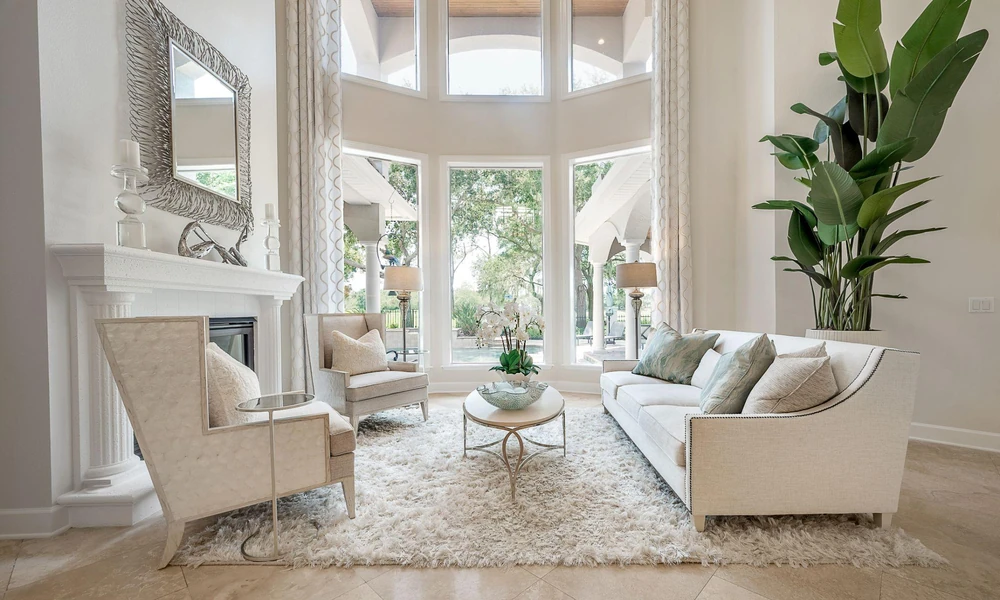
A whole-home renovation gives you an opportunity to rethink how your home looks, functions, and flows from room to room. It also creates a challenge: with so many decisions being made at once, individual spaces can start to feel disconnected.
At McKinlay Rose Interiors, we approach renovation design as one complete composition. Instead of treating the kitchen, bathrooms, living areas, lighting, finishes, and furnishings as separate projects, we develop an overall vision that guides decisions throughout the home. Our full-service residential design process can include space planning, material selections, contractor coordination, furnishings, installation, and final styling.
Key Takeaways
- A cohesive renovation begins with an overall design direction before individual selections are made.
- Repeating selected colors, materials, finishes, and architectural details can create visual continuity.
- Cohesion does not require every room to look identical.
- Space planning should happen early because layouts affect lighting, furniture, cabinetry, and circulation.
- Coordinating decisions before construction advances can reduce last-minute compromises.
- Furnishings, artwork, lighting, and accessories help connect the finished architectural spaces.
Start With the Whole Home, Not One Room at a Time
It is tempting to begin a renovation by choosing a favorite kitchen countertop or bathroom tile. We prefer to establish the larger design story first.
What should the home feel like? Which architectural features deserve emphasis? How should one space transition into the next? Which materials should repeat, and where should we introduce contrast?
Answering these questions early gives individual selections context.
A dramatic stone might be perfect for a powder room but overwhelming if repeated throughout the house. By contrast, a consistent flooring material or recurring metal finish may provide exactly the visual connection several spaces need.
The objective is not repetition for its own sake. It is intentional continuity.
Use a Consistent Material and Color Language
A cohesive home typically has recognizable relationships between rooms.
That might mean carrying similar wood tones through cabinetry and furnishings, repeating selected metals in lighting and hardware, or developing a color palette that evolves as you move through the house.
McKinlay Rose co-founder Kristen McKinlay describes one of our design approaches as creating a neutral foundation and then selectively introducing color through elements such as art, glass, and custom fabrics.
This gives us room to create distinctive spaces without making them feel unrelated.
A dining room can be richer and more dramatic than an adjoining living room while still belonging to the same home.
Plan Layouts Before Finalizing the Details
Whole-home renovation interior design is also about function.
Before choosing every finish, we consider furniture placement, circulation, storage, lighting, and how each room will actually be used.
Furniture layouts can influence outlet locations and lighting. Cabinetry affects pathways and storage. Kitchen planning connects to dining and entertaining spaces. Even the scale of architectural details can depend on the furniture that will eventually occupy a room.
Our renovation services include early design planning, space planning, kitchen and bathroom design, fixture and finish selections, and coordination with contractors and trades.
Making these decisions as part of one plan helps keep the home functional as well as visually connected.
Let Some Rooms Have Their Own Personality
Cohesive does not mean identical.
One of the quickest ways to make a renovated home feel flat is to repeat exactly the same colors, finishes, and decorative choices everywhere.
We prefer connection with variation.
A powder room may provide an opportunity for expressive wallpaper. A study might introduce a deeper color palette. A bedroom can feel softer and quieter than the main entertaining spaces.
Those rooms can still relate to the rest of the home through proportion, materials, craftsmanship, or recurring design details.
The best whole-home designs have rhythm. There is enough consistency to create continuity and enough variation to keep each space interesting.
Do Not Stop the Design at Construction
New flooring, cabinetry, countertops, and lighting can completely change a house, but they do not finish the interior.
Furniture, rugs, window treatments, artwork, decorative lighting, and accessories complete the experience.
McKinlay Rose’s full-service approach continues through sourcing, purchasing, deliveries, installation, and styling, allowing the original design vision to carry through to the finished home.
This final layer is often what turns a renovated property into a home that feels personal.
Conclusion
A successful whole-home renovation should feel connected without becoming predictable.
We create that balance by establishing the overall vision early, coordinating layouts and construction selections, repeating key design elements thoughtfully, and allowing individual rooms to develop their own character.
At McKinlay Rose Interiors, we work alongside builders, contractors, architects, artisans, and trades while managing the interior design details from concept through final styling.
The goal is not simply to renovate every room. It is to create one complete home where every room feels like it belongs.
Frequently Asked Questions
How do you make a whole-home renovation feel cohesive?
We begin with an overall design direction and then create relationships between spaces through color, materials, finishes, architectural details, lighting, furnishings, and proportion.
Does every room need to use the same color palette?
No. Rooms can have different personalities while sharing selected colors, materials, or design details that create continuity.
When should I hire an interior designer for a renovation?
We recommend involving a designer during the early planning stage. McKinlay Rose notes that making important design decisions before demolition or installation begins can help contractors plan more accurately and reduce last-minute substitutions.
Does McKinlay Rose manage the construction itself?
We provide renovation design, contractor coordination, schedule coordination, and design oversight. We work alongside licensed builders, contractors, and trades rather than serving as the general contractor or performing construction labor.
Can you also furnish the home after renovation?
Yes. Our services can continue through furniture, lighting, rugs, window treatments, artwork, accessories, purchasing, installation, and final styling.
This post was written by a professional at McKinlay Rose Interiors. McKinlay Rose Interiors is a full-service Interior Design company in Saint Petersburg, FL, specializing in Home Renovation, Modern Interior Design, Luxury Interior Design, and Beach Condo Interior Design. As one of the leading Interior Design companies near you-and a trusted choice among Interior Design in Wesley Chapel FL -we serve clients throughout Saint Petersburg, Clearwater, and Sarasota, FL. Our experienced team provides expert guidance and reliable solutions, making us a top choice for Interior Design near you, focused on quality, value, and performance.
