

The paperwork for a new roof usually shows up at an awkward time. Hail has gone through the neighborhood, or a ceiling stain has spread over the winter, and an estimate is sitting on the kitchen table, folded into thirds. The total at the bottom gets all the attention. The lines above it decide whether the roof lasts thirty years or starts causing trouble in five.
Most homeowners replace a roof only once or twice, so few of them know which lines matter. Two bids can show nearly the same price and describe very different jobs. One contractor may plan a full tear-off with new ice barrier and ventilation. Another may plan a layover with no mention of the decking. The contract is where those differences either come out or stay hidden.
Comparing quotes works best with a few reference points. Fantastic Services LLC, a GAF certified roofing company in Green Bay with an A+ BBB rating that offers free estimates, is one example of the kind of credentials and written terms worth checking for. Whoever ends up doing the work, these six details should be settled in writing before anyone climbs a ladder.
Whose Boots Will Actually Be on Your Shingles
The name at the top of the estimate isn’t always the crew that shows up. Many roofing outfits use subcontractors, which is fine as long as you know it. Ask who will be on the roof, whether they are employees or subcontractors, and who supervises them. Then ask for a current certificate of liability insurance and proof of workers’ compensation coverage, sent straight from the insurer and not as a photocopy.
This matters most after a big storm in northeast Wisconsin, when out of state crews come into town and knock on doors. The National Roofing Contractors Association’s guidance on handling roof repairs after a storm tells homeowners to look for damage from the ground and leave the closer inspection and repairs to a professional roofing contractor. That’s a good reason to slow down before signing with whoever shows up first. Wisconsin’s storm chaser rules add more protection. A contractor can’t offer to cover your insurance deductible, and you can cancel within three business days if your insurer denies the claim. Any contract that ignores those rules is a warning sign.
The Layers Nobody Has Seen Yet
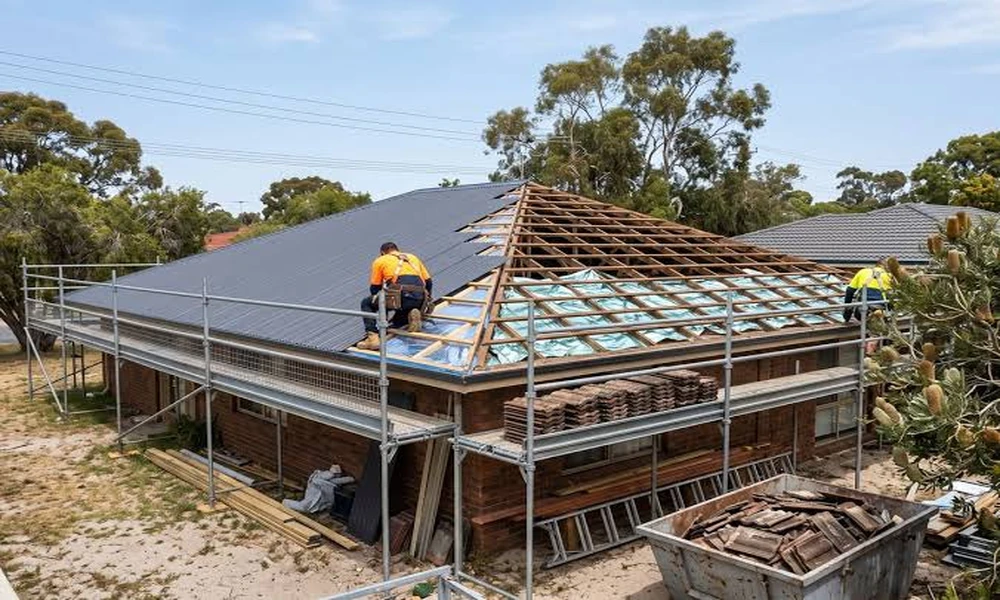
Every reroof involves a decision about what happens to the old shingles. A layover puts new shingles on top of the existing ones. It saves on labor and disposal, but it adds weight, traps any rot underneath, and hides problems with the decking. Building codes also cap how many layers a roof can carry. Many older homes in the Green Bay area already have two layers, so a full tear-off is the only option.
The contract should say tear-off and should say what happens if the crew finds damaged decking once the old roof is off. Nobody can see that wood until the shingles come up, so honest estimates handle it with a unit price, a fixed cost per sheet of OSB or plywood replaced. Without that number, the homeowner has no leverage on the morning a foreman calls down to say twelve sheets are soft. Ask that the contract also require the crew to show you or photograph the damaged sheets before replacing them.
What Goes Down Before the Shingles
The shingles are what you see. What protects the house sits underneath them, and in a climate with long snow seasons the bottom edge of the roof does the hardest work. Check that the contract names each of these layers.
- An ice and water barrier membrane at the eaves, running from the edge to at least 24 inches inside the exterior wall line, which is the cold climate minimum in most codes
- The same membrane in valleys and around chimneys, skylights and plumbing vents
- Synthetic underlayment over the rest of the deck
- New drip edge at the eaves and rakes, not old metal reused
- New step flashing and counter flashing where the roof meets a wall, with chimney flashing addressed specifically
If a bid just says “install new roof,” it leaves every one of these to the crew’s judgment that day.
Air Moving Through the Attic
Ventilation rarely gets a full line on an estimate, but it affects both how long the shingles last and how bad the ice dams get. An attic needs intake air coming in low at the soffits and exhaust leaving high through ridge vents or roof vents. When soffit vents are blocked by insulation or covered with solid aluminum, a new ridge vent pulls very little air. A good contractor checks this before quoting and puts the plan in writing, including whether baffles will be added to keep soffit airflow open.
Shingle manufacturers care about this as well. Many warranty terms assume the attic is properly ventilated, so a roof installed over a stuffy attic can lose coverage before the first claim is ever filed.
Warranties That Exist Beyond the Brochure
Roof warranties come in two kinds, and homeowners often mix them up. The manufacturer’s warranty covers defects in the shingles. The workmanship warranty covers installation mistakes, which cause most real roof failures. Both should be named in the contract, with how long each lasts and who backs it.
Enhanced manufacturer warranties raise the stakes. With GAF, for example, the stronger coverage tiers are available only through certified contractors and generally require using the manufacturer’s full system of matching components, not shingles mixed with off-brand underlayment and ridge caps. Some of these warranties also have to be registered after the job is done. Ask who handles the registration and when you will get the paperwork.
The Paper Trail After the Last Nail
The last group of details covers money and wrap-up, and it’s where small oversights become expensive.
Payment schedule. A reasonable deposit followed by payment on completion is normal. A large upfront payment for a job that hasn’t been scheduled is not.
Lien waivers. Wisconsin law lets suppliers and subcontractors place a lien on a home if the contractor doesn’t pay them. Ask for lien waivers covering materials and labor before you make the final payment.
Permits. The contract should say who pulls the building permit and that the job will pass any required inspection.
Cold weather installs. Shingle seal strips need warmth to bond. A late fall job should explain whether shingles will be hand sealed or how wind lift will be prevented until spring.
Cleanup. Ask for magnetic sweeps for nails across the lawn and driveway, protection for landscaping and gutters, and removal of the dumpster within a stated number of days.
A roof contract written with this much detail can feel like overkill when you sign it. It looks much better ten winters later, when the roof is still dry and every promise that was made can be found in writing.
