

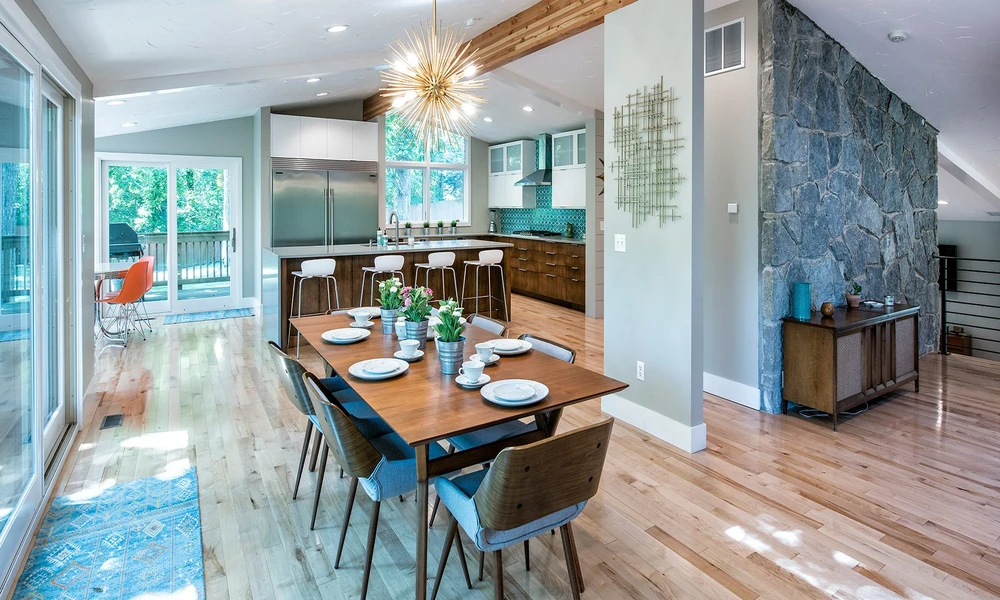
On a quiet Saturday morning, Mark and Elena drove across town with one simple goal.
They wanted to choose new cabinets.
After nearly fifteen years in the same house, they were convinced the kitchen had reached the end of its life. The cabinet doors showed wear, storage never seemed sufficient, and preparing dinner together often felt like navigating around one another in a room that no longer fit their routine.
“We’ll probably pick a cabinet color today,” Elena said as they parked.
Neither of them realized they were about to rethink the entire project.
“The best remodeling decisions rarely happen when you’re choosing materials. They happen when you begin asking better questions.”
A Different Way of Looking at a Kitchen
The first kitchen showroom they visited looked exactly as they expected.
Beautiful islands.
Perfect lighting.
Rows of cabinet finishes.
Countertops polished to perfection.
For the first few minutes, they admired colors and hardware just as every homeowner does.
Then something unexpected happened.
A designer encouraged them to stop looking and start living.
“Pretend you’re making breakfast,” she suggested.
Mark walked from the refrigerator to the sink.
Elena stood where she normally prepared coffee.
They opened drawers.
Reached into corner cabinets.
Imagined unloading groceries.
Within minutes, they noticed something surprising.
The kitchen they originally liked in photographs suddenly felt awkward.
Another display-one they had almost ignored-felt remarkably comfortable.
The island wasn’t larger.
The cabinets weren’t more expensive.
The layout simply made more sense.
That realization changed the entire direction of the renovation.
Learning That Bigger Doesn’t Always Mean Better
After leaving the first showroom, they continued their search.
Friends suggested visiting the bigest kitchen showroom in the region, convinced that more displays would naturally lead to better ideas.
The showroom was impressive.
Rows of kitchens stretched in every direction.
Luxury finishes.
Dozens of cabinet styles.
Countless countertop materials.
Yet after several hours, something unexpected happened again.
Everything began to blend together.
The displays became increasingly difficult to compare because there were simply too many of them.
Later that afternoon, they visited a smaller showroom.
Instead of displaying endless cabinet colors, each kitchen demonstrated a different solution.
One emphasized organization.
Another showcased lighting.
A third focused on workflow.
For the first time, Mark stopped asking,
“Which kitchen looks the best?”
Instead, he asked,
“Which kitchen would make cooking easier every day?”
It was a much better question.
“Great showrooms don’t overwhelm homeowners with choices. They teach them how to recognize good design.”
Discovering an Option They Hadn’t Considered
As planning continued, the conversation shifted toward cabinetry.
The original plan had always been complete replacement.
It seemed obvious.
Old cabinets meant new cabinets.
Or so they thought.
During another meeting, the designer carefully examined the existing cabinet boxes.
They were still solid.
The layout already worked reasonably well.
Most of the visible wear appeared on the cabinet doors and drawer fronts.
That observation introduced a completely different possibility.
Instead of replacing everything, they began researching how to reface kitchen cabinets.
The more they learned, the more the idea made sense.
If the cabinet structure remained in excellent condition, why remove something that still performed well?
The savings could instead improve lighting, drawer organization, soft-close hardware, and countertop materials-upgrades the family would appreciate every single day.
Sometimes the smartest remodeling decision isn’t replacing more.
It’s replacing only what truly needs replacing.
The Kitchen They Didn’t Expect to Build
Construction eventually came and went.
Dust settled.
Tools disappeared.
Life returned to normal.
But something felt different.
Preparing meals no longer required navigating around one another.
Storage finally made sense.
Morning coffee happened without searching for mugs or clearing clutter from the countertop.
Friends admired the updated cabinetry.
Family members appreciated something else entirely.
The kitchen simply worked.
Months later, someone asked Mark what his favorite part of the renovation had been.
He paused before answering.
“Honestly,” he said, “it wasn’t choosing cabinets.”
“It was realizing we were asking the wrong questions.”
That single showroom visit had changed more than the appearance of the kitchen.
It had changed the way they thought about remodeling itself.
Looking back, they hadn’t simply renovated a room.
They had learned that the best kitchens are designed around everyday life-not around products.
