

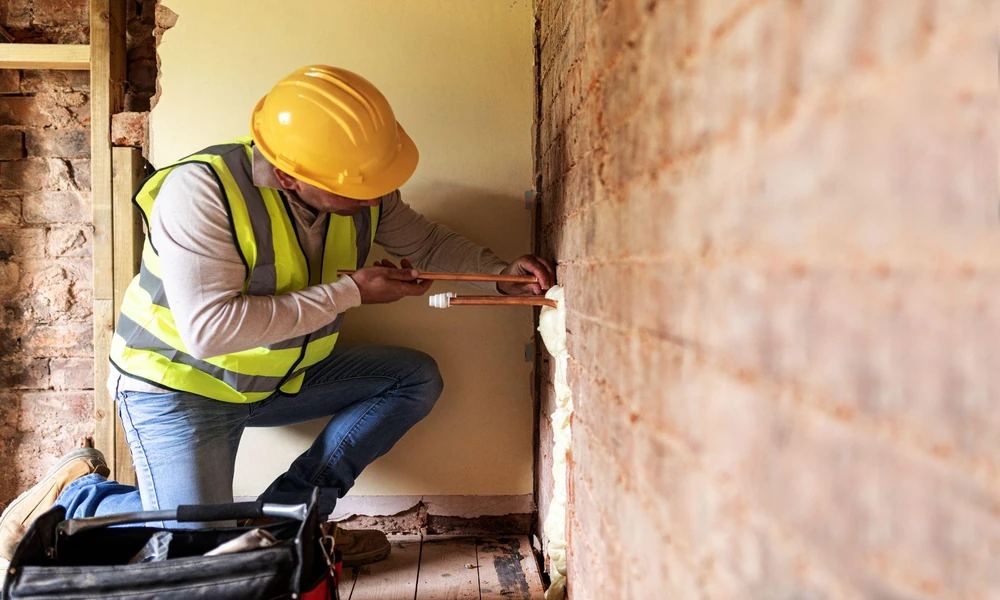
Cut open a wall during an A&A project, and you rarely find exactly what the original drawings say should be there. Somewhere between the first day the house was built, and the day the hammer finally goes through the plaster, a house quietly accumulates its own unwritten history, a rewired circuit here, a plumbing detour there, a support beam moved slightly from where it started. Every A&A renovation is, in some small way, an act of reading that history back out again, one opened wall at a time.
The Surface Layer Rarely Tells the Whole Story
Paint, plaster, and a fresh coat of finish are remarkably good at hiding decades of small, undocumented decisions. A previous owner’s weekend rewiring project, a plumber’s shortcut that solved an immediate problem without much thought for what came after, a wall that was quietly reinforced at some point for reasons nobody remembers anymore, all of it sits patiently behind a surface that looks, to anyone glancing at it, like a house built exactly to its original plan. It almost never is, not entirely, and an A&A project is usually the first time in years anyone actually finds out.
Why This Detective Work Actually Requires a Trained Eye
Reading a house’s hidden history accurately, rather than simply reacting to surprises as they appear, takes genuine experience recognising what’s structural, what’s decorative, and what’s a previous fix quietly holding something together that shouldn’t have needed one. A capable A&A contractor in Singapore approaches an opened wall the way a good investigator approaches a scene, methodically, without assuming the drawings tell the whole truth, and with a clear sense of which discoveries actually matter for the work ahead and which are simply cosmetic curiosities worth noting and moving past.
What Decades of Undocumented Changes Actually Look Like Once Exposed
Open enough walls across enough older houses, and certain patterns start repeating themselves with almost comic regularity. Electrical wiring that branches off in directions no circuit diagram would ever suggest, because someone once needed power in a spot the original plan never anticipated. Plumbing routed around an obstacle nobody thought to document, because it solved the immediate problem well enough at the time. Structural elements quietly adjusted during an earlier renovation that never made it into any official record anywhere. None of this is usually sinister; most of it reflects perfectly reasonable decisions made under perfectly reasonable pressure, decades ago, by someone who never imagined anyone would need to trace their logic again.
Why the Architecture Firm Behind the Project Actually Shapes This Experience
How smoothly these discoveries actually get absorbed into a project, rather than derailing it entirely, depends heavily on whether the team behind the design was already anticipating this kind of surprise from the outset. An established architecture company in Singapore with genuine experience in older landed properties tends to build a reasonable margin for this uncertainty directly into project planning, rather than treating every hidden discovery as an unplanned crisis requiring the whole schedule to be renegotiated from scratch.
Why Full Rebuilds Skip This Particular Chapter Entirely
A full knock-down-rebuild starts from genuinely empty ground, no walls to open, no decades of quiet decisions to untangle, no detective work required at all. That’s precisely why A&A work carries a different kind of planning risk than a rebuild does, and why timelines and budgets for renovation projects reasonably build in more flexibility than a from-scratch build typically needs. It isn’t a flaw in the process; it’s simply an honest acknowledgement that an existing house has a past a new one simply doesn’t.
Every wall opened during an A&A project has something to say, usually something practical, occasionally something faintly ridiculous, and every so often, something genuinely worth knowing before construction continues. Treating that discovery process as a normal, expected part of the work, rather than a disruption to it, tends to be the difference between a renovation that adapts gracefully and one that stalls every time the house reveals another chapter nobody wrote down.
Curious what your own walls might be hiding? Contact Meridian Homes and find out before the hammer goes through.
