

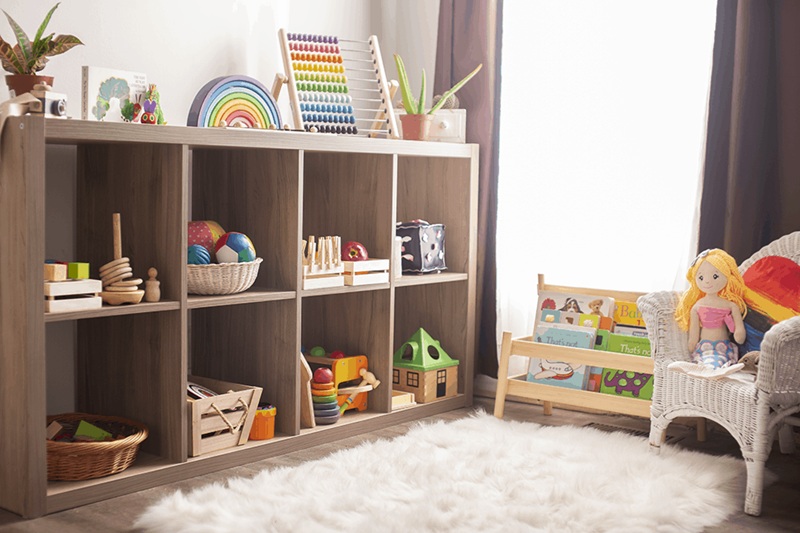
Minimalist playrooms have become a game-changer for families aiming to inspire creativity while reducing the chaos of cluttered spaces. This approach is not just about cutting down on toys, it’s a thoughtful way to foster focus, independence, and imagination in children.
In fact, by simplifying their environment, children are encouraged to engage deeply with the resources available and explore their creative potential.
Here’s how to design a minimalist playroom that unlocks your child’s creativity.
Declutter for Clarity
The first step to creating a minimalist playroom is decluttering. Remove toys and items that are broken, unused, or overstimulating. Many children tend to feel overwhelmed when presented with too many options, which can lead to them playing with nothing at all.
Focus on quality over quantity. Keep only the toys that are genuinely loved and played with. You might notice that simplifying their environment encourages children to concentrate better and play more imaginatively. Decluttering also makes it easier for kids to clean up after themselves, teaching them responsibility in the process.
Choose Open-Ended Toys
Minimalist playrooms thrive on the concept of open-ended play. Open-ended toys, such as wooden blocks, art supplies, or building sets, allow children to use their imagination rather than follow a rigid set of instructions. These toys encourage problem-solving, storytelling, and creative thinking.
A few carefully selected items can go a long way. Think about adding a dollhouse, play kitchen, or a set of magnetic tiles that your child can use in multiple ways. Natural materials, like wooden or fabric toys, add a tactile and sensory element that plastic toys often lack. By offering fewer but more versatile play options, children become active creators instead of passive consumers.
Create Organized Spaces
Organization is a critical element of minimalist playrooms. Children thrive in environments where they can easily see and access their play materials. Use low, open shelves or bins to neatly display toys. Label containers with either words or pictures to make tidying up a fun and achievable task for kids of all ages.
At the same time, resist the urge to fill every inch of the room. Open floor space inspires active, physical play and allows children to spread out their creations. Fewer items, strategically placed, not only make the playroom look appealing but also encourage children to focus on one activity at a time.
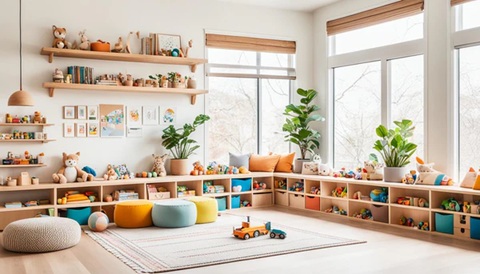
Incorporate Natural Elements
Adding natural elements to a playroom enhances its minimalist vibe while sparking creativity. Natural light, plants, and wood textures can make a space feel more calming and connected to the outdoors. Consider positioning the playroom near a window to provide ample sunlight and a glimpse of nature.
Nature-inspired toys or loose parts, like shells, pinecones, and smooth rocks, can also be excellent tools for fostering imagination. These items help children engage in sensory play and create stories and activities inspired by the natural world.
Design for Imaginative Play
Finally, think carefully about the room’s layout. A minimalist playroom should serve as a canvas for children’s creativity. Leave enough open space for fort-building, role-playing, or sprawling out with art supplies. You could also set up defined zones for different activities.
However, avoid overstimulating the space with loud colors or excessive decorations. Neutral tones with pops of soft, soothing colors work best to create a harmonious environment that encourages productive play without distractions.
Conclusion
Minimalist playrooms are much more than a design choice, they are an opportunity to foster curiosity, creativity, and self-expression in children. By decluttering, choosing open-ended toys, creating an organized setup, and adding natural touches, you can craft a space that engages their imaginations while promoting independence.
